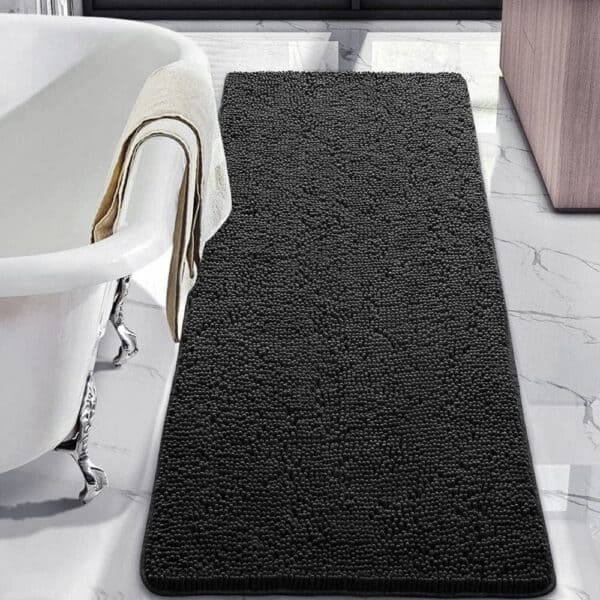
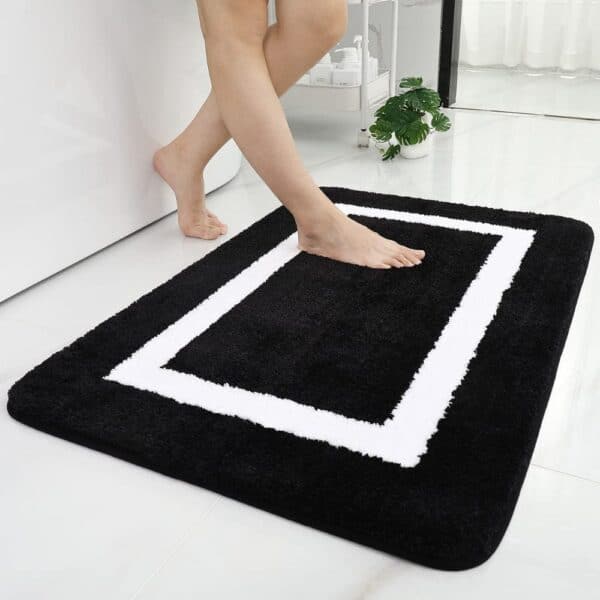
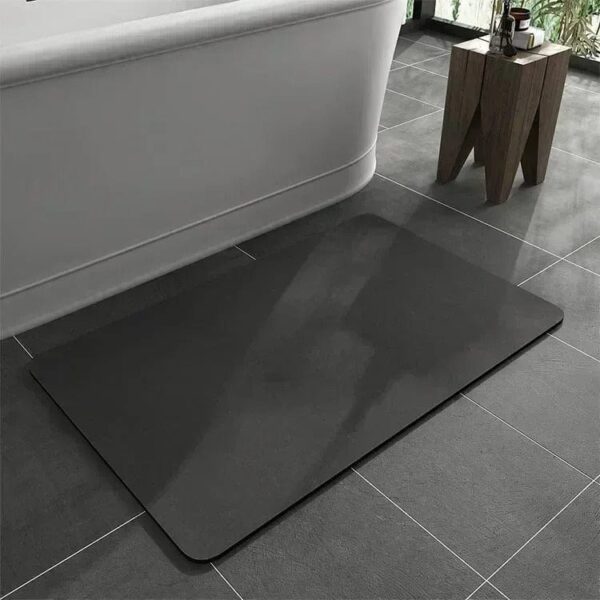
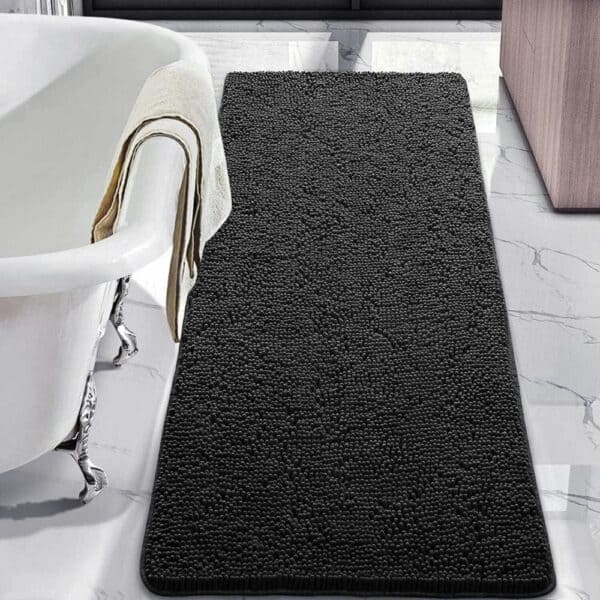
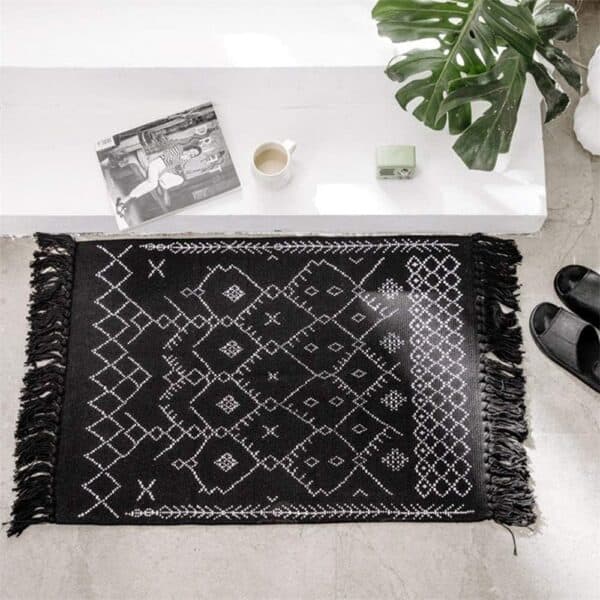
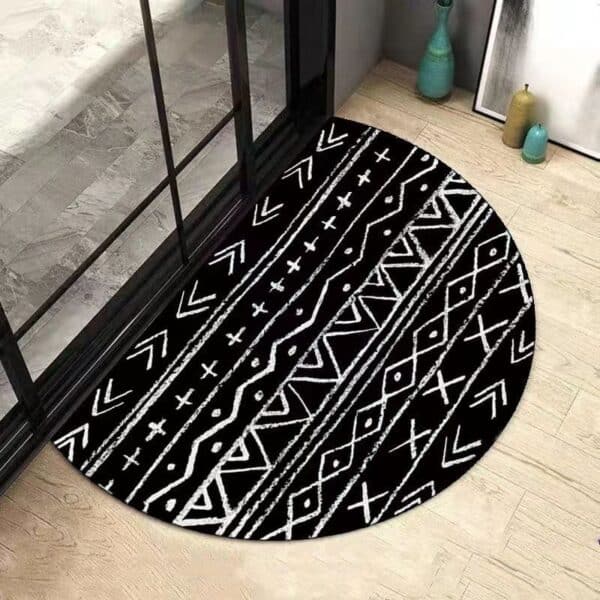
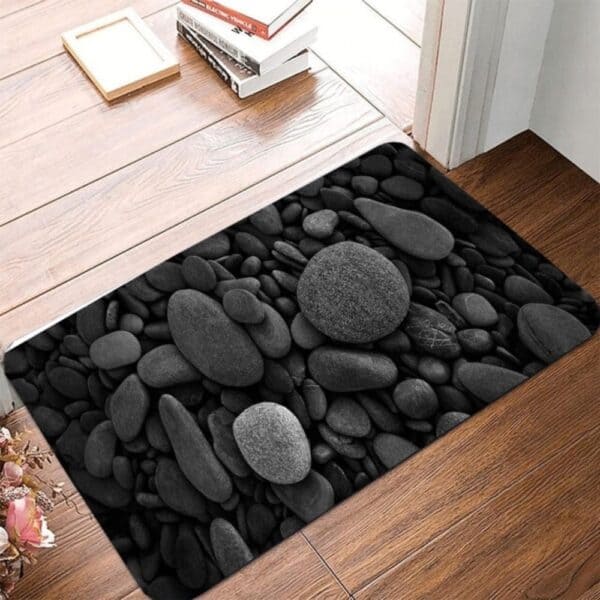
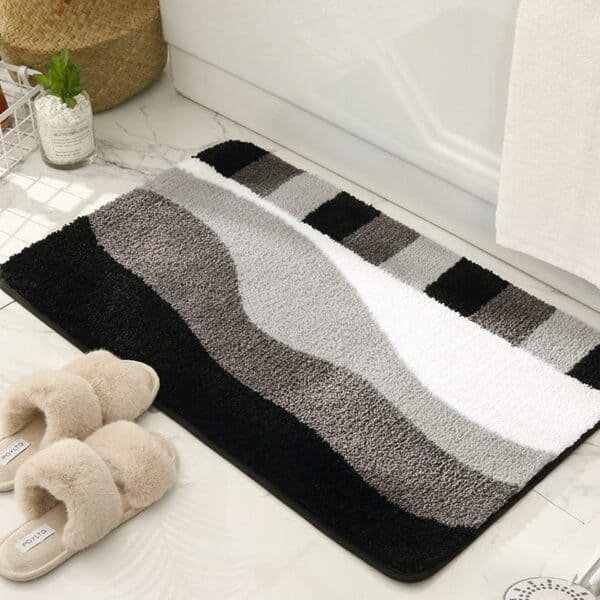
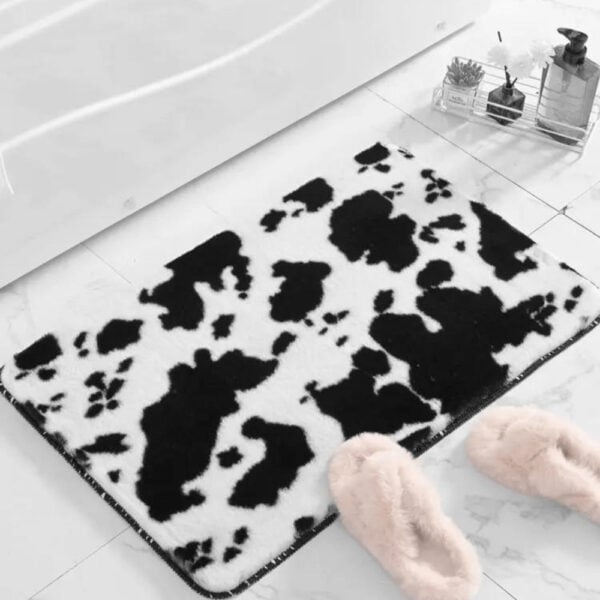
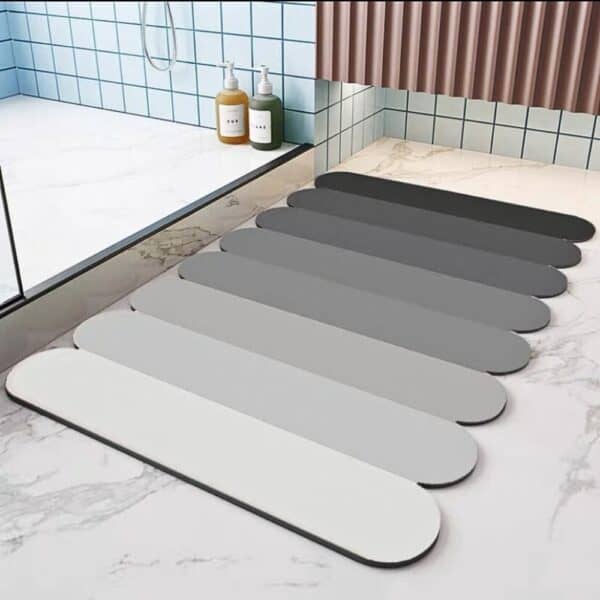
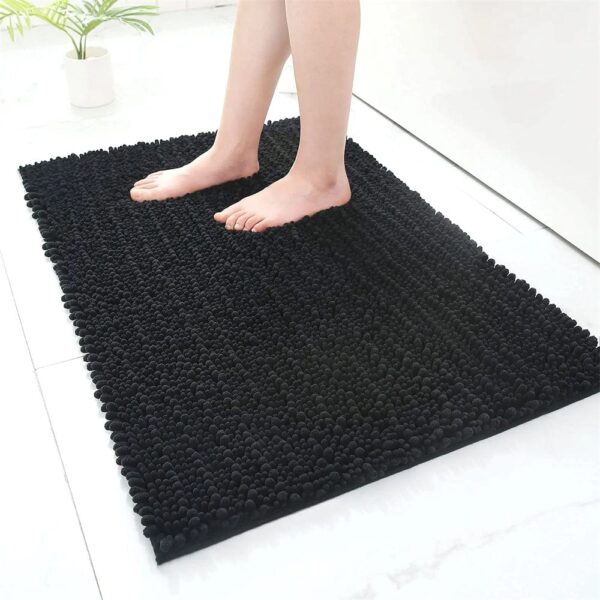
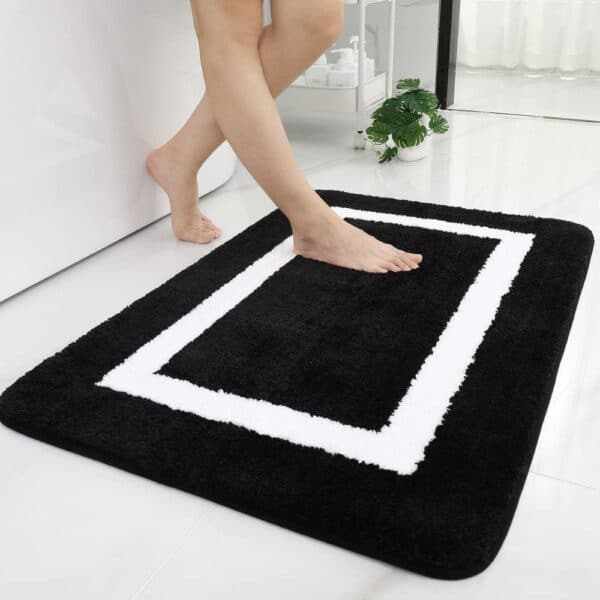
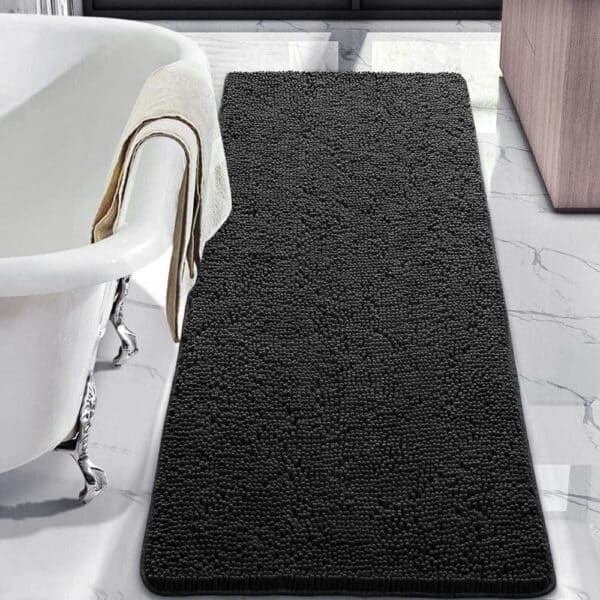
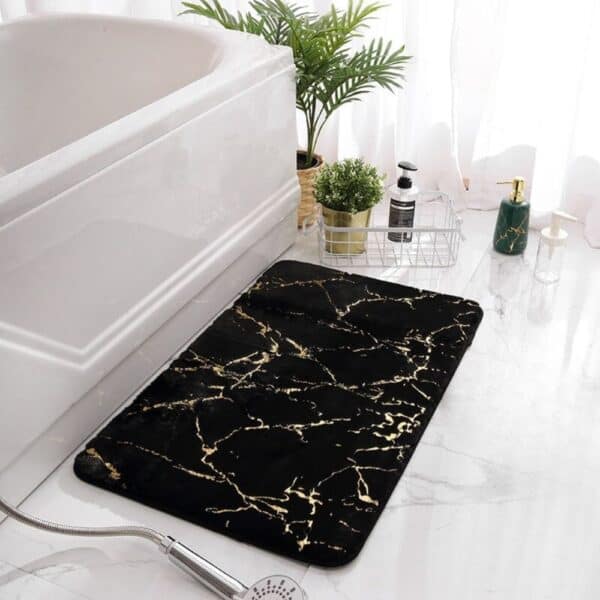
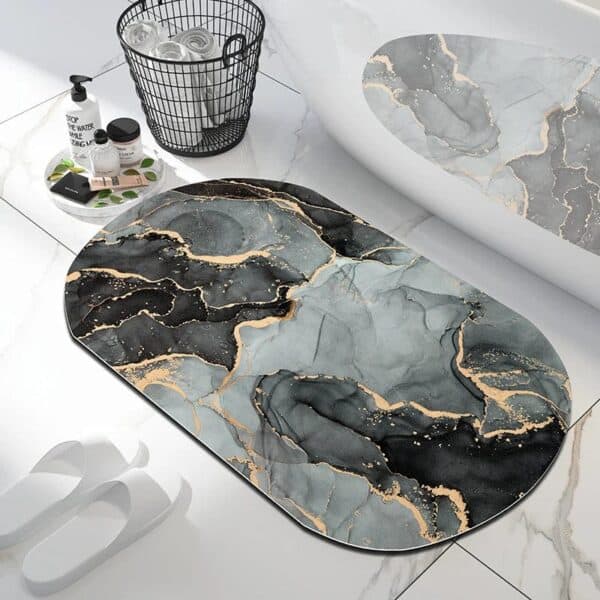
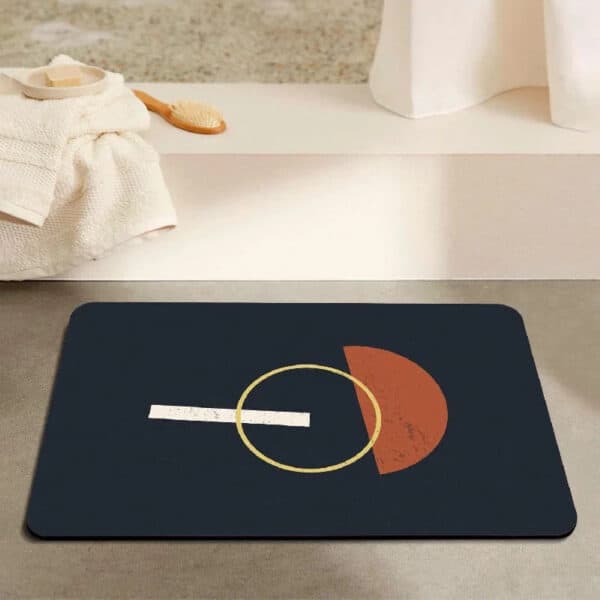
A dark mat on a pale tile floor does something a white or grey option simply cannot: it grounds the whole room visually while quietly doing its job underfoot. Whether the bathroom is monochrome, industrial, or just in need of a stronger focal point, a black bath mat pulls the look together without demanding much in return.
What actually separates one black bath mat from another
Colour is where the similarity ends. Beneath the surface, these mats differ considerably in how they feel, how quickly they dry, and how long they hold their shape through repeated washing. The key variables are pile depth, backing material, and fibre construction.
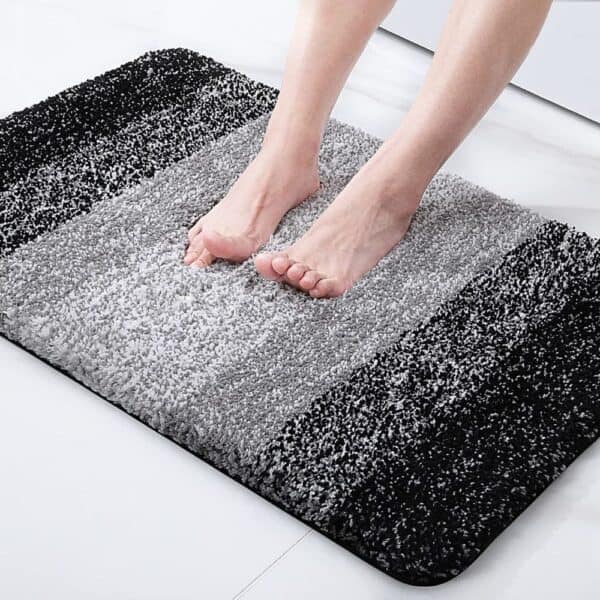
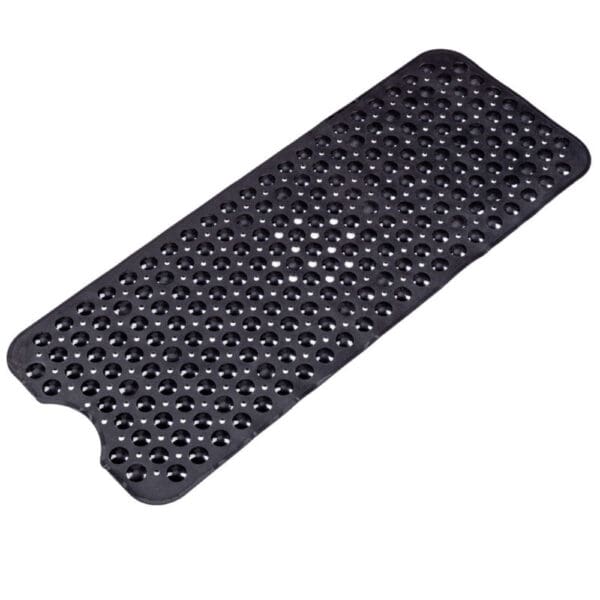
Short-pile mats (typically flat-weave or microfibre) sit closer to the floor, dry faster, and tend to stay flatter over time. Deeper-pile options feel softer underfoot but retain moisture for longer, which matters in a poorly ventilated bathroom. Backing matters too: a suction-cup or rubberised base grips smooth porcelain or ceramic tiles far better than a simple latex spray, particularly on wet floors.
Worth knowing: Black fabric holds dye well, but cheaper blends can show lint and dust more visibly than mid-tone colours. Check the fibre composition before buying if low maintenance is a priority.
Choosing the right mat for your bathroom
Size and placement
The most common mismatch is buying a mat that is too small for the space in front of the bath or shower. A large absorbent bath mat covering roughly 40 x 60 cm or more gives both feet full contact with the mat the moment you step out, reducing drips onto the floor. Smaller formats (around 40 x 50 cm) suit compact ensuite bathrooms or are used as a second mat beside the basin.
Absorbency versus drying speed
These two qualities pull in opposite directions. A thick cotton or cotton-blend mat absorbs a generous amount of water in one use, but may still feel damp by the next morning in a bathroom without good airflow. A microfibre or short-loop mat absorbs less in a single pass but releases moisture back into the air far more quickly. For a family bathroom used several times a day, faster drying is usually the more practical choice.
Surface patterns and finishes
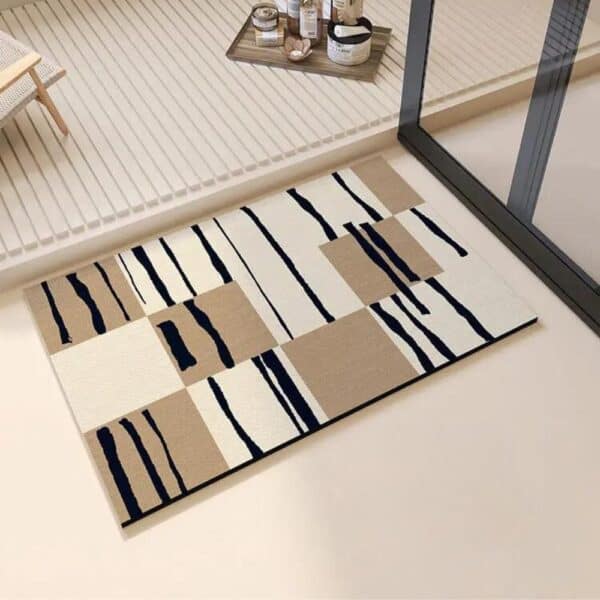
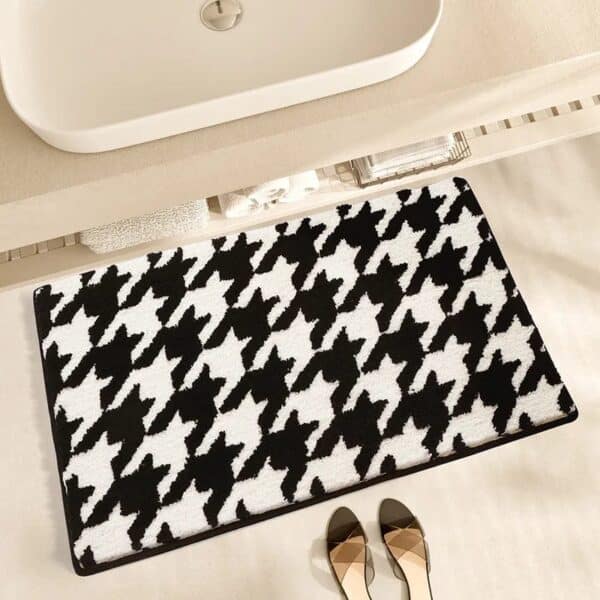
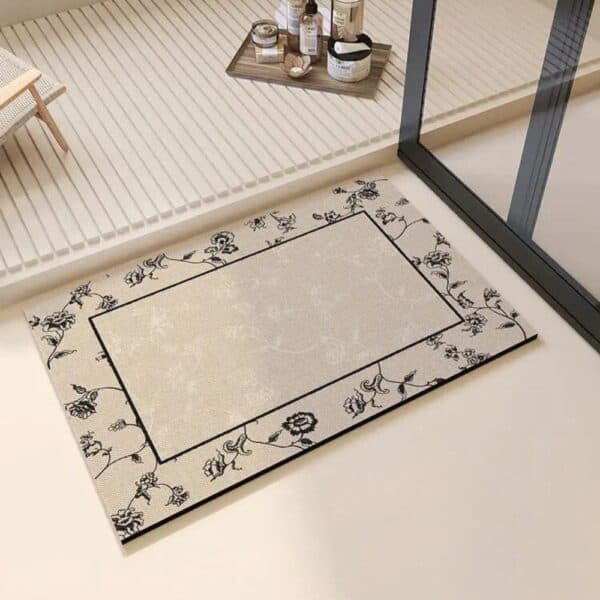
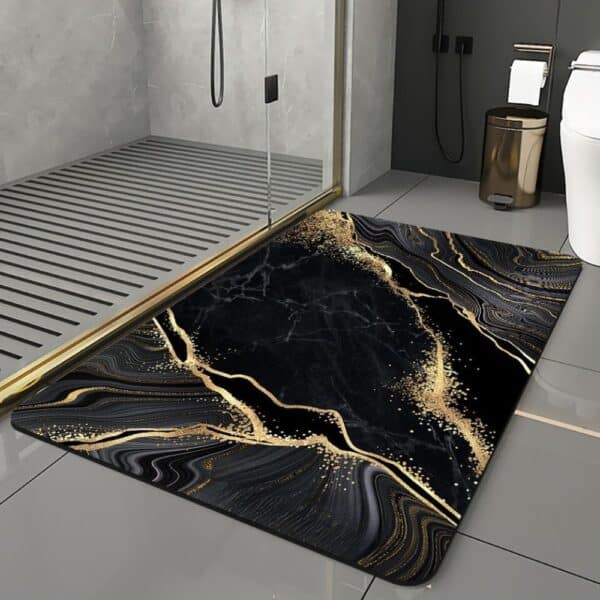
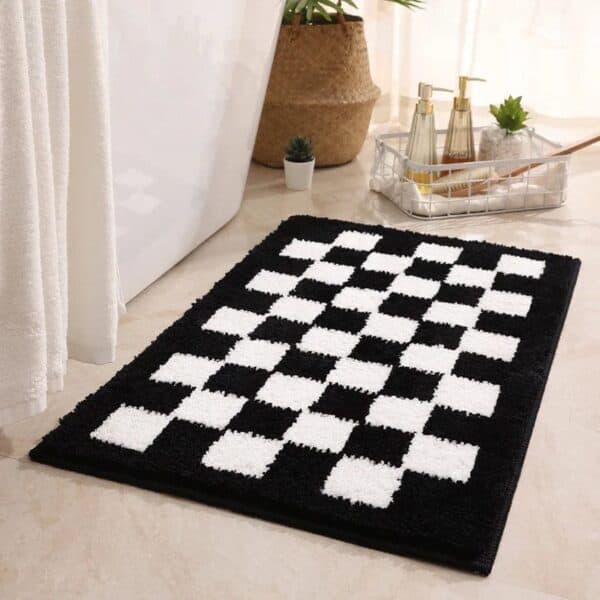
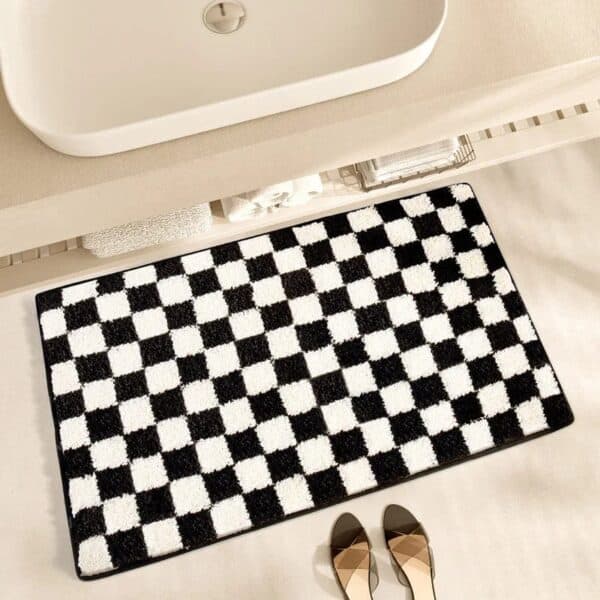
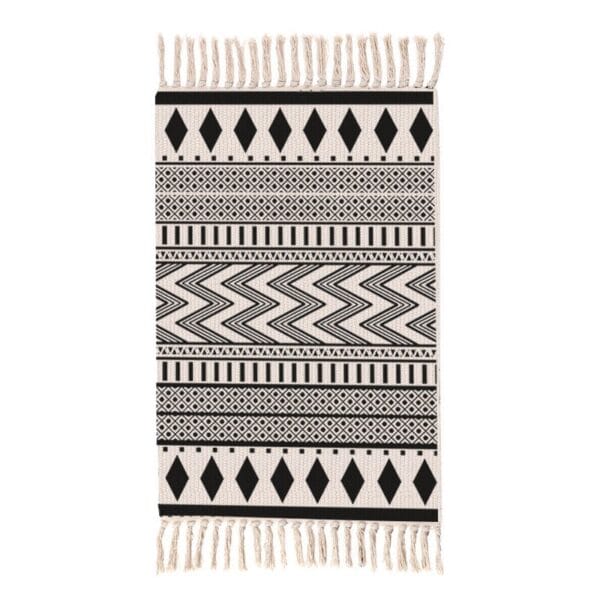
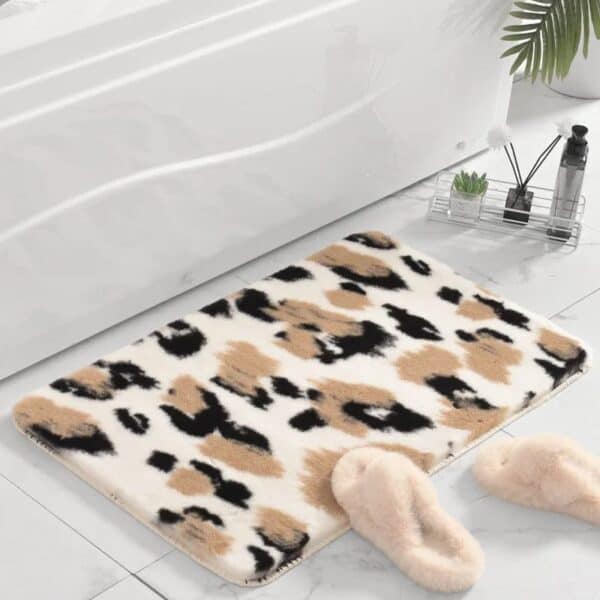
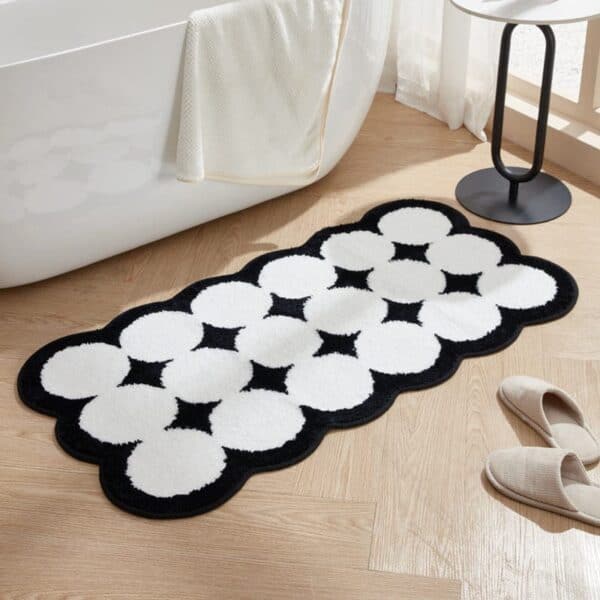
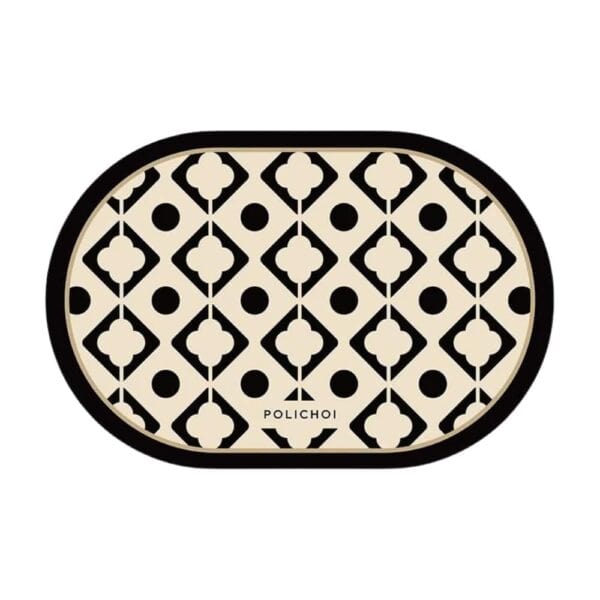
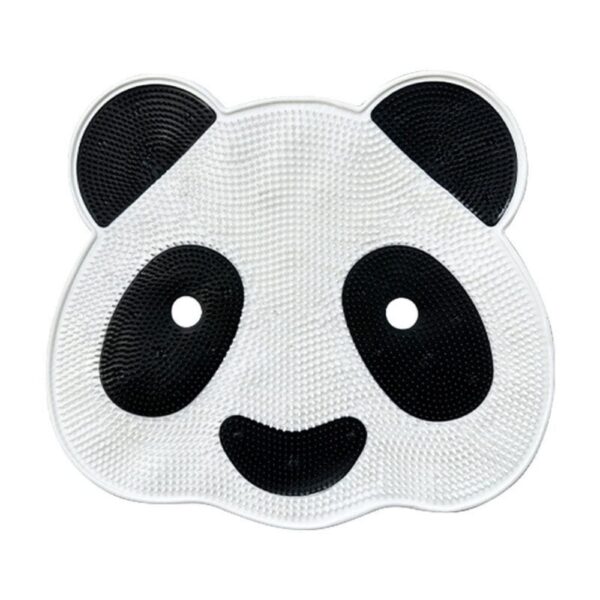
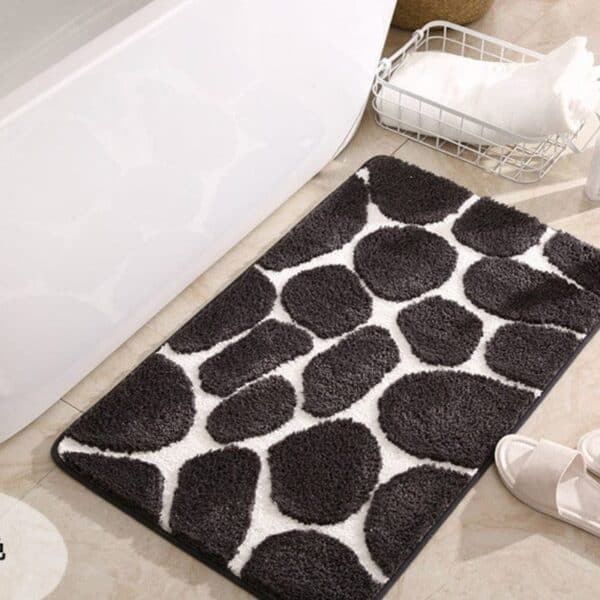
Not every black bath mat is a flat solid colour. Marble-effect prints introduce a veined grey-and-black pattern that suits contemporary tiling without the cost of real stone. Novelty prints, such as a panda motif or a typographic design like “Get Naked”, add a lighter touch to what might otherwise be a very austere scheme. Consider the existing hardware finishes in the room: matte black taps and towel rails will carry a solid black mat confidently, while chrome or brushed nickel finishes often pair better with a mat that has some tonal variation.
When a black mat makes sense, and when it does not
Dark mats work best in bathrooms with light or neutral grout and tile colours, where the contrast reads clearly. They are also a practical choice for households where the bathroom floor sees heavy traffic, since dark fabric is more forgiving of scuff marks and grime between washes.
However, in a very small bathroom with dark walls and dark flooring, a black mat can visually compress the space further. In those cases, a contrasting lighter tone from the broader bath mat range may serve the room better. Similarly, if the bathroom is used primarily by young children, a lighter or brightly coloured mat makes it easier to spot dirt and assess whether the mat needs washing.
| Mat type |
Best suited to |
Trade-off |
| Deep-pile cotton blend |
Low-traffic bathrooms, comfort-focused use |
Slower to dry, heavier to wash |
| Microfibre short-loop |
Busy family bathrooms, poor ventilation |
Less cushioning underfoot |
| Flat-weave / printed |
Design-led spaces, novelty prints |
Lower absorbency overall |
| Marble-effect print |
Contemporary or monochrome schemes |
Pattern may fade with frequent washing |
Care and longevity
Most black bath mats are machine washable, but the washing temperature and spin speed affect how long the mat retains its shape and colour depth. Washing at lower temperatures (30°C or 40°C) preserves dye intensity and prevents the backing from cracking prematurely. Avoid tumble-drying mats with rubberised or suction-cup bases, as heat degrades the grip material over time. Hanging the mat over a towel rail or radiator between uses keeps the pile fresh and extends the interval between washes.
If you are pairing the bath mat with other textiles, a black bathroom rug for the wider floor area can complete the scheme, provided the pile heights are reasonably matched so the transition between the two feels intentional rather than mismatched.
Frequently asked questions
Will a black bath mat fade after washing ?
It depends on the fibre and dye process. Cotton-rich mats tend to fade faster than polyester or microfibre blends, particularly if washed frequently at higher temperatures. Washing at 30°C and avoiding direct sunlight during drying helps preserve the depth of colour over time.
Is a non-slip backing essential ?
On smooth, wet tiles it is strongly advisable. Mats without a grippy base can shift underfoot when the floor is wet, which is the most common cause of bathroom slips. Check the product description for a rubberised, latex, or suction-cup backing before purchasing, especially if the floor surface is glazed porcelain.
What size should I choose for a standard UK bathroom ?
For the area directly in front of a bath or walk-in shower, a mat of at least 50 x 80 cm provides adequate coverage for most adults. Smaller formats around 40 x 50 cm are better suited as secondary mats near the basin or in compact shower rooms.
Can I use a bath mat on underfloor heating ?
Many mats are compatible with underfloor heating systems, but thick-pile or rubber-backed mats can act as insulators and reduce the efficiency of the heating. Thinner flat-weave or microfibre mats are generally the better fit for heated floors. Always check the manufacturer’s guidance on the specific product.
How often should a bath mat be washed ?
As a general guide, washing once a week is reasonable for a bathroom used daily by one or two people. Households with more users, or bathrooms with limited ventilation, may need to wash more frequently. A mat that feels persistently damp between uses is a sign it needs either more frequent washing or a faster-drying replacement.
The products listed below cover a range of sizes, finishes, and pile types, from compact printed designs to highly absorbent options built for daily use. Comparing a few alongside each other should make it straightforward to find the right fit for your bathroom layout and daily routine.